
The Short Version
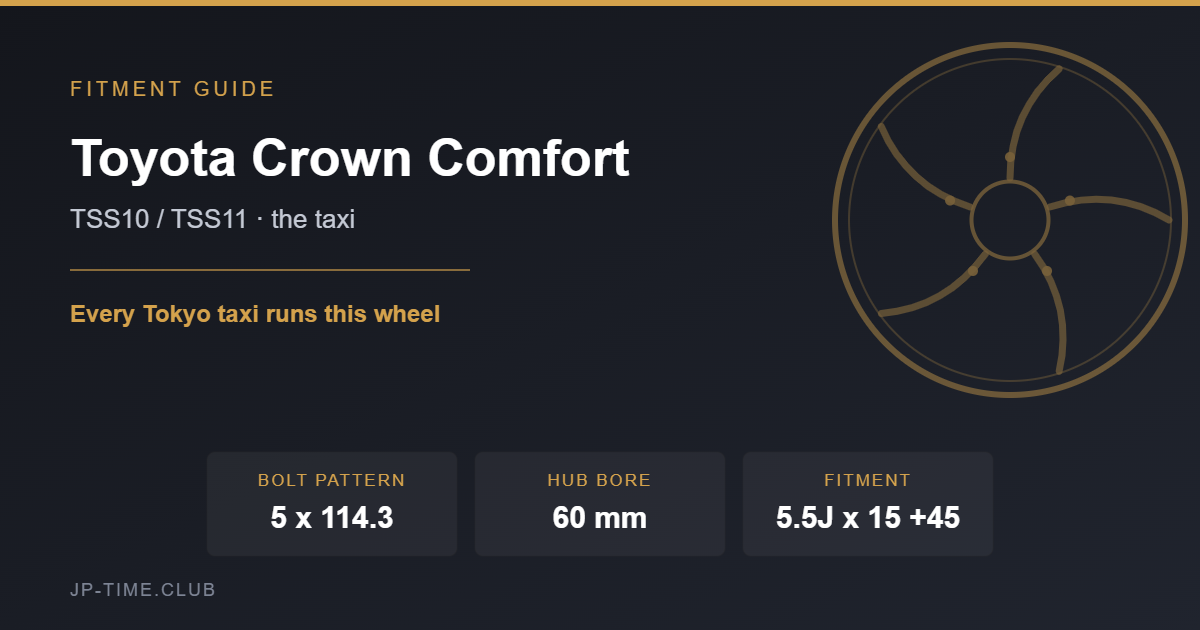
- 5×114.3 on a 60 mm bore. Published, not estimated.
- 5.5J×15 at +45 on 195/65R15. One fitment, eleven years, every grade.
- The taxi and the driving-school car are identical despite different chassis codes.
- The 1995–2008 first generation is not in the database.
The Most Standardised Vehicle in Japan
If you have been in a taxi in Tokyo, Osaka or Kyoto in the last thirty years, you have ridden on this wheel.
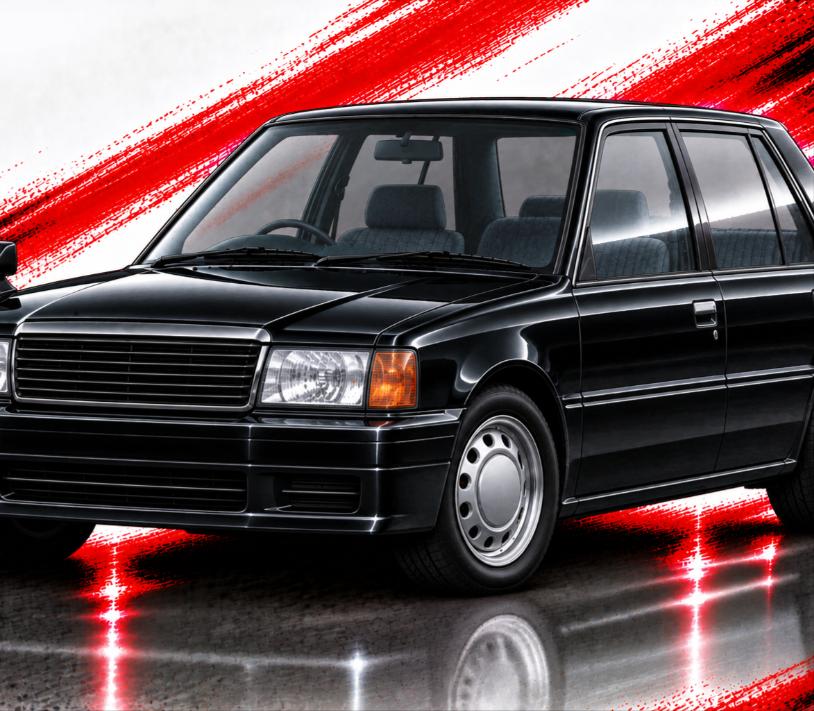
The Crown Comfort was built from 1995 to 2018 on deliberately old architecture, for one purpose: to be a taxi. Everything about it is optimised for a vehicle that will do 500,000 kilometres with a driver who did not choose it. That includes the wheels, and the result is one of the most uniform fitments we have documented.
| Model | Chassis | Period | Grades | Wheel | Tyre | PCD / Holes / Bore |
|---|---|---|---|---|---|---|
| Crown Comfort (taxi) | DBA-TSS10 | 2008.08–2019.09 | Standard, Deluxe, Deluxe A Package | 5.5J×15 +45 | 195/65R15 | 114.3 / 5 / 60 |
| Comfort (driving school / private) | DBA-TSS11 | 2008.08–2009.12 | SG 4AT, Standard 4AT, Standard 5MT | 5.5J×15 +45 | 195/65R15 | 114.3 / 5 / 60 |
Four separate dated production periods across eleven years, three grades in each, two model lines — and one specification throughout. Nothing changes.
Crown Comfort and Comfort Are the Same Underneath
The two are different chassis codes and different market segments. TSS10 is the taxi, usually LPG, usually with the rear door that opens for you. TSS11 is the Comfort — sold to driving schools, and to private buyers who wanted something indestructible.
Their fitment is identical: same wheel, same offset, same tyre, same PCD, same 60 mm bore. So driving-school wheels fit a taxi and vice versa, which matters because ex-driving-school cars often survive in better condition than ex-taxis.
The Bore Is Actually Published
Worth remarking on. Across this batch we have hit unresearched hub bores on the Cultus (every grade), the City, the Corsa family and the first-generation Avenir.
The Crown Comfort has a real number: 60 mm, stated in prose on the individual grade pages rather than left blank. That is Toyota’s large-car figure — the same as the Soarer Z20, the Chaser and the Crown S150.
So the whole large-Toyota wheel pool is open to you. A set of Chaser or Aristo wheels will bolt to a Crown Comfort correctly.
Why Anyone Would Import One
It is a fair question, and the answer is better than it sounds.
The Crown Comfort is a rear-drive, body-on-a-separate-subframe saloon with a 2.0-litre four, a column shift on some grades, a bench front seat on the taxi, and a chassis designed to be repaired cheaply and forever. It is the last mass-produced Japanese car built to that brief. Early cars are past 25 years and the TSS10 generation becomes eligible from 2033.
The appeal is the same as a Checker Marathon’s: it is honest, cheap, and completely unlike anything sold new today. And because taxi fleets replaced them in bulk, there are a lot of them.
Wheels for One
The factory wheel is a steel rim with a plastic cover on the taxi grades. Everything in the database is listed as 5.5J×15, which is narrow by any modern standard.
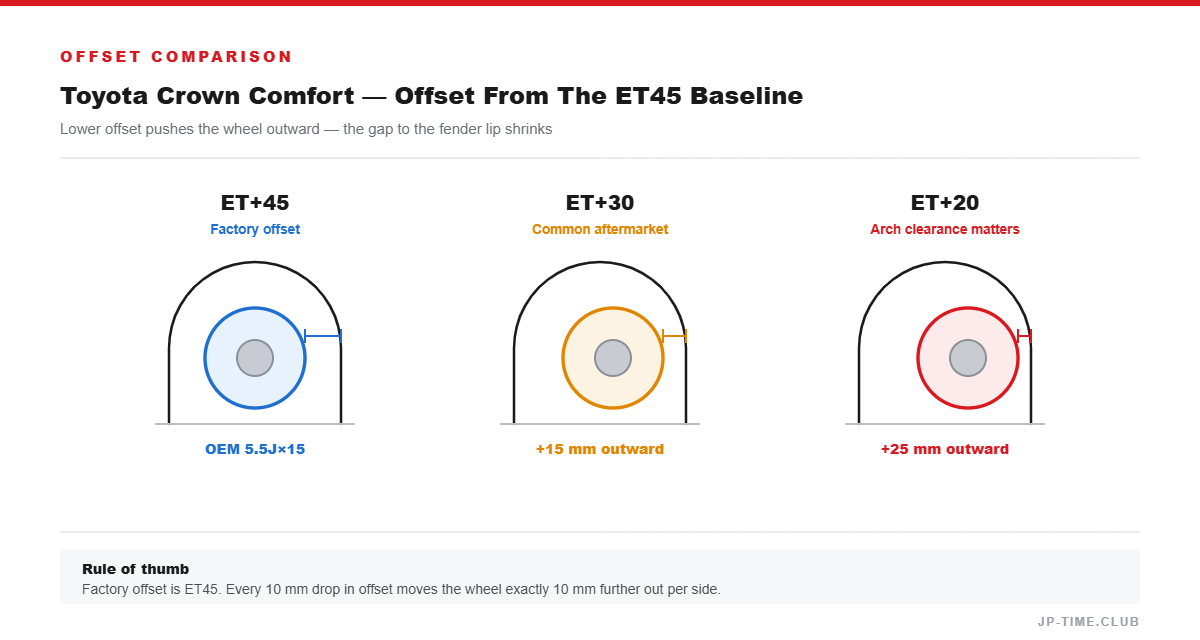
Given +45 on 5×114.3 / 60 mm, the sensible upgrade is 15×6.5J or 16×7J in the +35 to +45 band. There is not much arch room and the suspension is not sophisticated, so going aggressive achieves little.
The period-correct move — and the one we see most from customers — is a set of 14 or 15-inch classic Japanese wheels, which suits the car’s era far better than anything modern. Watanabe and Hayashi both still make sizes that fit.
What We Could Not Verify
- The entire 1995–2008 first generation. The database’s Crown Comfort coverage begins with the TSS10 chassis code in 2008. The earlier YXS, SXS and LXS-series cars are not present.
- A separate LPG taxi specification. No LPG-specific chassis rows are broken out, so we cannot confirm whether they differ.
- Wheelchair-accessible and long-wheelbase variants. No separate model page or grade exists to check.
- Steel wheel specifications. Every row in the database gives 5.5J×15; there is no separate steel-versus-alloy entry, so we cannot tell you whether the steel taxi wheel differs.