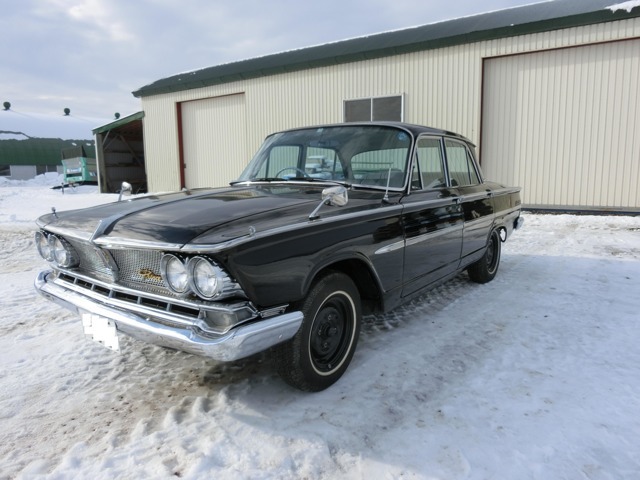
The Prince Gloria Super 6 arrived in June 1963 (Showa 38) as the six-cylinder flagship of Prince Motor Company’s Gloria line, and it carried a genuine first: Japan’s first production SOHC straight-six engine. Three years before Prince merged into Nissan, this was the car built to prove Prince could compete with anything Toyota or Nissan had on the road.
A Company That No Longer Exists
Prince Motor Company traced its roots to Tachikawa Aircraft and Fuji Precision Industries, and by the early 1960s it had built a reputation for engineering that punched above its sales volume — the original Skyline (1957) and the first Gloria (1959) both came from the same small company. Crown Prince Akihito’s known preference for Prince vehicles gave the brand a prestige halo that its market share didn’t otherwise justify. None of that was enough to keep Prince independent: in August 1966, under MITI-driven industry consolidation, Prince was absorbed into Nissan. The Gloria name survived; the Super 6 you’re looking at predates that merger by three years and still wears the original badging.
The G7 Engine: Japan’s First Production SOHC Six
Chassis code S41D-1, the Super 6 paired the existing S40-generation Gloria body with a new engine: the Prince G7, a 1,988cc SOHC straight-six making 105PS (77kW) at 5,200rpm and 16.0kgm at 3,600rpm through a single 2-barrel carburetor, on an 8.8:1 compression ratio. At the time, every other mass-production Japanese six was still running pushrods. The G7’s layout and general engineering approach owed a visible debt to Mercedes-Benz’s M180 six, and the same block family would go on to power the Prince Skyline GT (S54) that raced at Suzuka in 1964. Period performance figures: 0–100km/h in 18.0 seconds, top speed 155km/h. Launch price was ¥1,190,000, or ¥1,380,000 with factory air conditioning — a genuinely premium car for 1963 Japan.
The chassis backed up the engine with equipment that was unusual for the class: a de Dion rear axle paired with front double-wishbone suspension, at a time when leaf-spring live axles were still the norm. A 2-speed automatic (built by Okamura Corporation, marketed as “Space/Super Flow”) was offered from 1964–65 before Prince switched to a Borg-Warner 3-speed automatic.
What We Know About This Car
| Spec | Figure |
|---|---|
| Engine | Prince G7, 1,988cc SOHC straight-6 |
| Output | 105PS (77kW) @ 5,200rpm / 16.0kgm @ 3,600rpm |
| Wheelbase | 2,680mm |
| Track (F/R) | 1,380mm / 1,400mm |
| Curb weight | 1,320kg |
| Stock tire size | 7.00-13, 4PR, tubeless |
| Rear suspension | De Dion axle |
The car pictured here is finished in black, riding on plain steel wheels with no aftermarket badging visible — a period-correct look for a car this age that was never factory-fitted with alloy wheels in the first place.
What We Could Not Verify
We looked for a bolt pattern (PCD), lug count, and hub bore for the S41 Gloria Super 6 across every wheel-fitment database we have access to, including enthusiast and owner-club sources, and found nothing. This isn’t unusual for a car built in 1963 in numbers small enough that it never entered the aftermarket wheel industry’s reference databases the way later, higher-volume JDM classics did. Rather than guess at a number that could send someone ordering the wrong wheels, we’re treating this car as a history piece rather than a standard fitment guide. If you own one of these and know the bolt pattern from a parts manual or direct measurement, we’d like to hear from you.
We also could not independently confirm the design of the factory hubcap/wheel trim beyond “plain steel wheel,” since no source we checked includes period photos detailed enough to describe it with confidence.
Wheels Currently in Stock
We carry a range of classic JDM steel and alloy wheels sourced in Japan. If you’re restoring or customizing a Prince Gloria Super 6, message us with your hub measurements and we’ll help you find a compatible fit — we source on request even when a car isn’t in a fitment database yet.