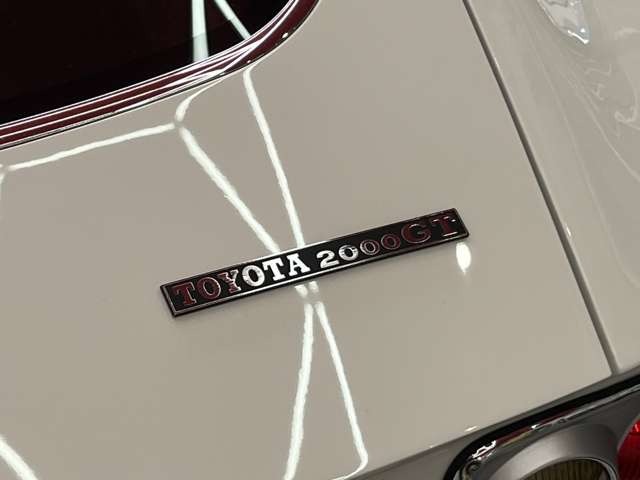
The Toyota 2000GT (MF10) ran from May 1967 to 1970, built in a joint effort between Toyota and Yamaha with a 2.0L 3M straight-six good for 150PS. Only 351 units were made, including a handful of special 2.3L models. It’s one of the most documented Japanese classics in existence — and yet almost nothing about its wheel fitment shows up in the usual wheel-fitment databases. That’s because the 2000GT’s original wheel isn’t held on by a bolt pattern at all.
OEM Wheel Specifications
| Spec | Value | Confidence |
|---|---|---|
| Wheel diameter | 15 inches | Confirmed |
| Wheel material | Magnesium alloy | Confirmed |
| Mounting system | Center-lock (single large hub nut + 5 index key shafts, not a multi-bolt pattern) | Confirmed |
| Tire size | 165R15 (H-rated) | Confirmed |
| Rim width / offset | Not independently confirmed | Unconfirmed |
The 2000GT is widely cited as the only Japanese mass-production car built with a single-nut, center-lock wheel — the same knock-off principle used on cars like the Jaguar E-Type, rather than the multi-lug bolt pattern every other JDM classic in our fitment guides uses. Each wheel is secured by one large hub nut, indexed by five key shafts so the wheel can only seat one way, with the nut on the right-hand side of the car using a reverse (left-hand) thread. We found this described consistently across a dedicated Motor Fan feature on the 2000GT’s factory wheels and corroborated by reproduction-parts suppliers who currently sell replacement center-lock wheel sets and hub nuts for restorations — if there were a conventional bolt pattern to reproduce, that’s not the part they’d be remaking.
That’s also why you won’t find a PCD (bolt circle) number for this car in any wheel-fitment database, including our own usual sources: there isn’t one to find. The wheel diameter (15 inches), material (magnesium), and tire size (165R15) are corroborated across multiple independent sources, but we could not find a published rim width or offset figure for the factory wheel — center-lock wheels of this era are typically specified by backspacing rather than the offset convention used for bolt-on wheels, and none of the sources we checked (English or Japanese) published that figure.
What This Means for Aftermarket Fitment
If you’re restoring a genuine MF10, aftermarket fitment isn’t really an “aftermarket wheels” question in the way it is for a bolt-pattern car — it’s a question of sourcing or reproducing the correct center-lock hub and wheel assembly, since standard bolt-on wheels won’t mount to the factory hub at all without a conversion. This is also almost certainly why so many 2000GT-bodied builds — including replica and tribute cars built on a modern donor chassis — run conventional multi-bolt wheels instead of reproducing the original center-lock system: it keeps the car on ordinary tire and wheel stock rather than a specialty knock-off setup.
Wheels Currently in Stock
Because the genuine MF10’s factory mounting system isn’t a bolt pattern, we don’t carry a direct OEM-fit wheel for it. If you’re running a 2000GT-bodied car built on a modern chassis — like a tribute or replica — check the donor platform’s own bolt pattern and browse our current stock for a fitment-confirmed match, or message us with your chassis details and we’ll help source in Japan on request.
What We Could Not Verify
- Rim width and offset (or backspacing) for the factory center-lock magnesium wheel — no source we checked, English or Japanese, published this figure.
- Whether every one of the 351 production units used an identical wheel spec, or whether any running changes occurred across the 1967-1970 production run.
- The wheels pictured on the car in this article are a conventional multi-bolt aftermarket/reproduction-style design, not the factory center-lock magnesium wheel described above — the vehicle itself is a modern-built super replica (seller-listed with a 3.0L inline-six, dual exhaust, an automatic transmission, navigation, a backup camera, ETC and Bluetooth — none of which the original 1967-1970 MF10 ever had) rather than an original production car, so its actual wheel bolt pattern and hub spec depend on its donor chassis, which we could not independently confirm, rather than on the OEM figures in this guide.