

We have written a lot recently about JWL and JWL-T — Japan’s two separate technical standards for light-alloy wheels, one for passenger cars and one for trucks and buses. Writing about a standard is easy. Showing you a wheel is better.
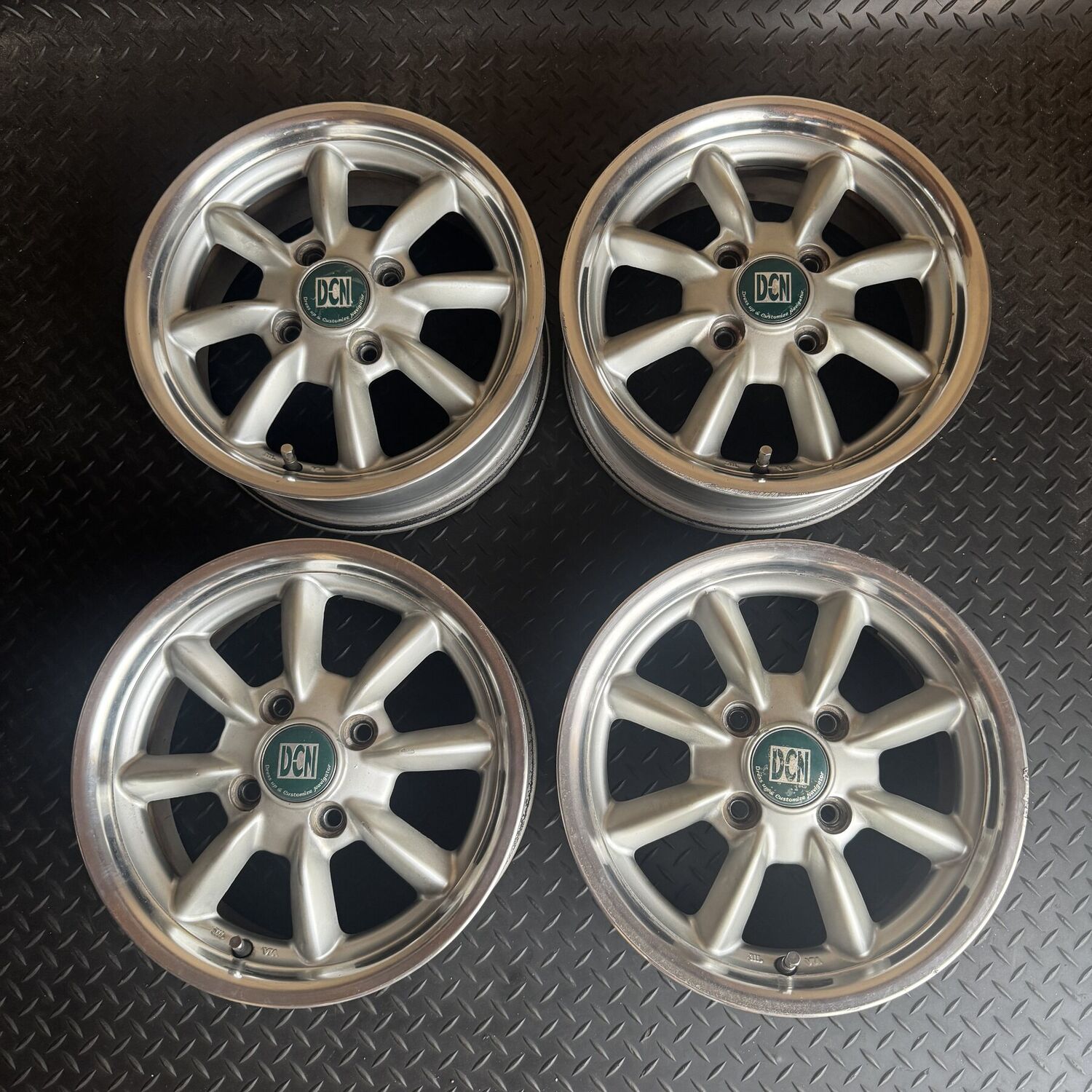
So here is one, out of our own stock: a set of four DCN Daihatsu genuine option wheels, 13×5J at +40 on 4×100. Every mark on them is photographed below.
The short answer to the question you are probably here for: this is a genuine Daihatsu option wheel, and it is stamped JWL, not JWL-T. That single fact is more useful than anything else on the wheel.
What DCN Is
DCN stands for Dress up & Customize Navigator. It is Daihatsu’s own accessory and dress-up parts line — the range a Japanese Daihatsu dealer sells you alongside the car, covering everything from over-fenders and fog lamp covers to wheels.
So these are not aftermarket wheels that happen to fit a Daihatsu. They are Daihatsu-branded, dealer-channel parts. Which makes what is stamped on them more interesting, not less.
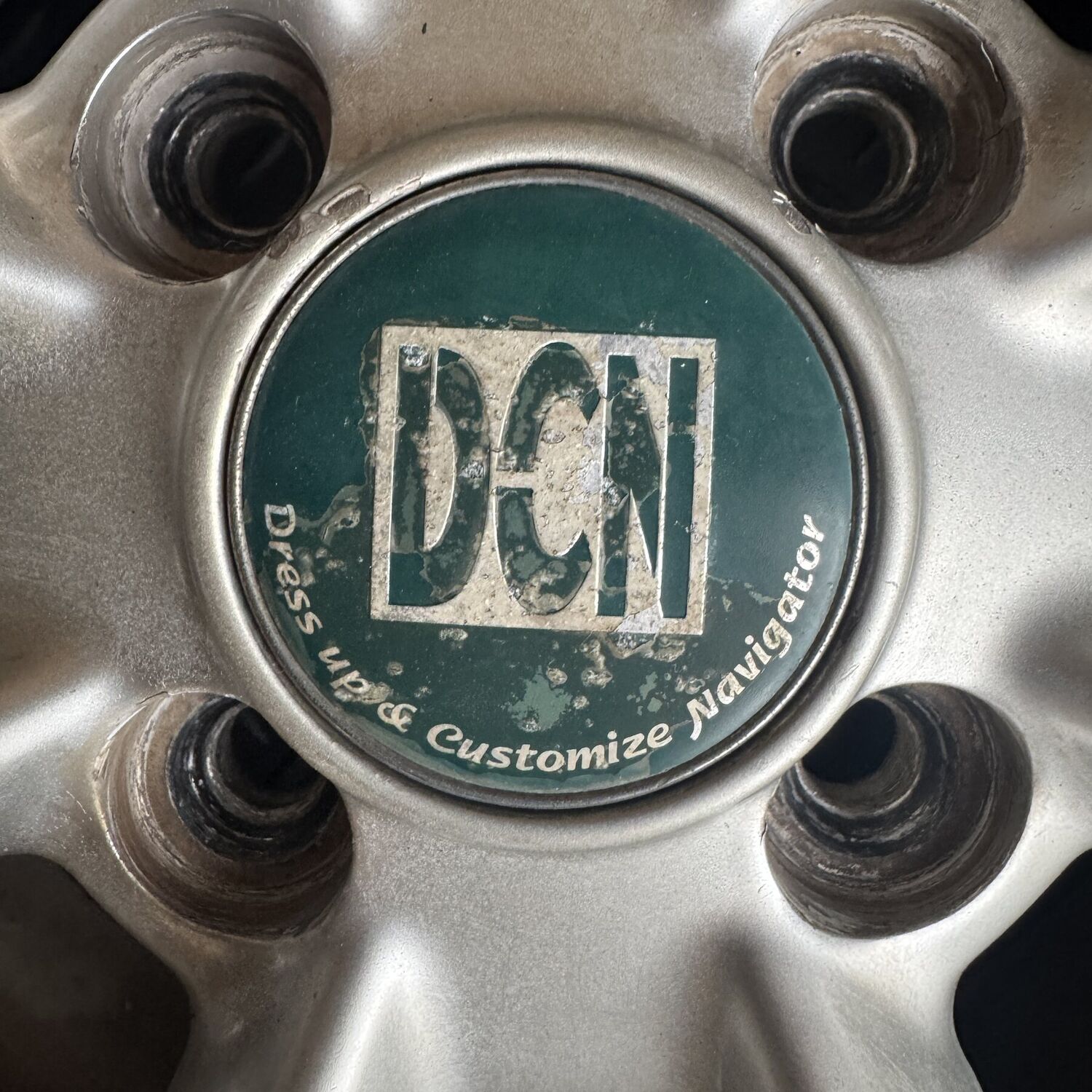
DCN over Dress up & Customize Navigator. Daihatsu’s in-house accessory brand.The Marks That Matter Are on the Front
Look at the wheel face, either side of the valve hole. VIA on one side, JWL on the other. Both cast into the front of the disc, both readable with the wheel bolted to the car and the tyre fitted.
That placement is not an accident. Japan’s industry body NAPAC, which administers the marking rules, requires that the JWL or JWL-T mark and the VIA mark be positioned “where they can be easily confirmed with the wheel mounted on the vehicle.”
It is the one part of Japanese wheel marking designed to be inspectable in a car park. If you are looking at a used JDM wheel and you cannot find these two marks from the front, that in itself is worth asking about.
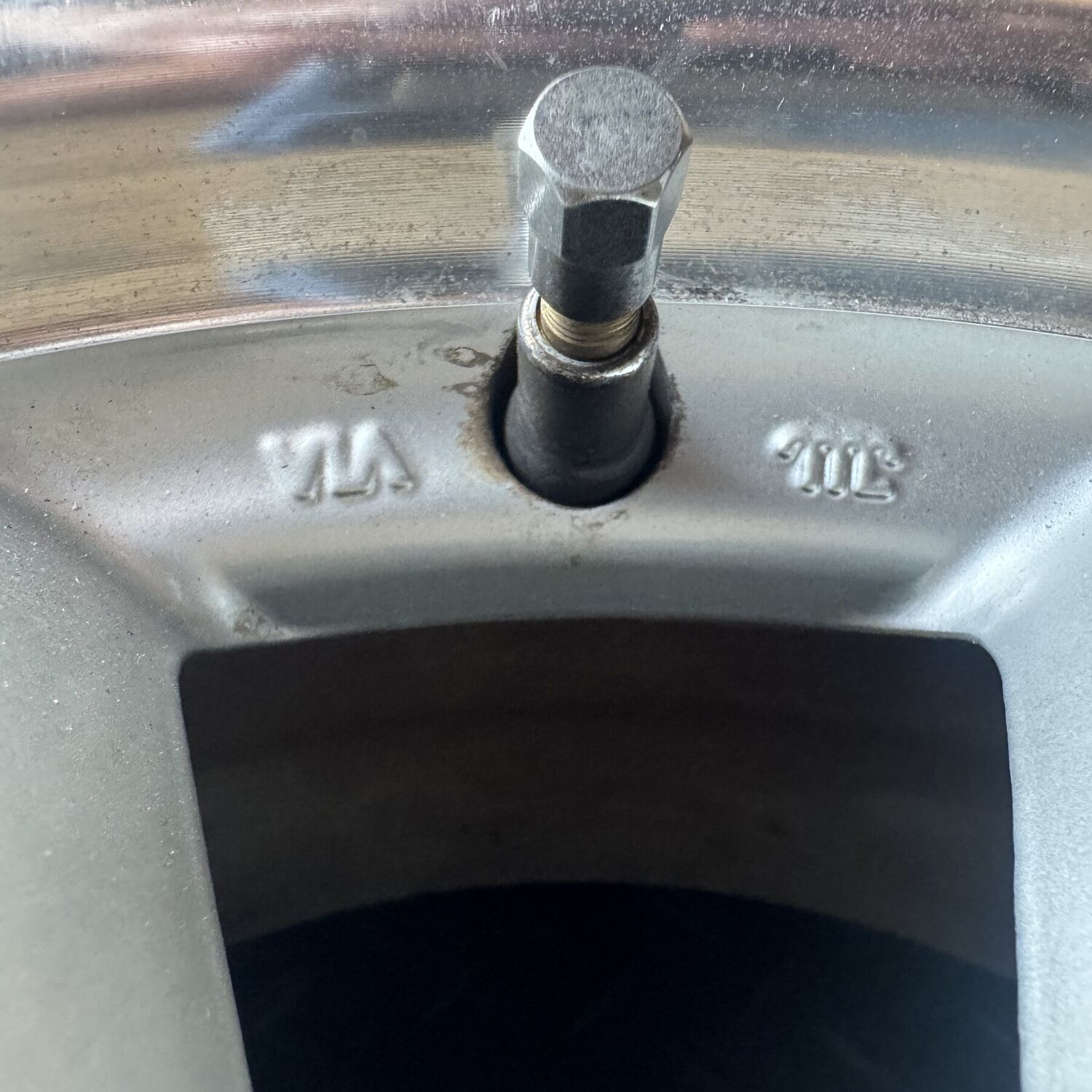
VIA (left) and JWL (right), on the front face beside the valve. Not JWL-T.Why JWL and Not JWL-T Is the Whole Point
Japan has two separate technical standards for light-alloy wheels, both issued under the same Ministry of Transport notification of 1 October 1983 and both still current:
- a standard for passenger cars — the
JWLmark - a standard for trucks and buses — the
JWL-Tmark
Kei vehicles come in both flavours. A Daihatsu Mira or a Move is a passenger car. A Daihatsu Hijet truck or a Hijet Cargo van is registered as a cargo vehicle — the four-digit plate class — and wheels sold for those in Japan are normally certified to the truck standard.
This wheel is 13×5J on 4×100 at +40. That is passenger-kei territory: Mira, Move, Tanto, that family. And it is marked accordingly.
So here is the useful conclusion, and it is not obvious from the box: “Daihatsu genuine” does not mean “suitable for a Daihatsu kei truck.” The same manufacturer makes both kinds of vehicle, and the wheel is certified for the one it was designed for. If you are shopping for a Hijet that actually carries its 350 kg, the mark you want is JWL-T, and this is not it.
None of which makes this a worse wheel. It makes it a wheel for a different job.
The Load Rating Is Stamped, and It Is Paired With the PCD
On the back of a spoke: 4X100 600KG.
That pairing is deliberate. Under the Japanese marking rules, a wheel developed for a limited set of vehicles carries either a code representing those vehicles or a load figure — and the load figure is defined as half the axle weight at the vehicle’s gross weight, which is to say what one wheel actually carries. Casting the bolt pattern next to it says which fitment the number applies to.
600 kg per wheel is generous for a kei passenger car. It is a real number you can check against your own vehicle, which is more than most wheels will give you.
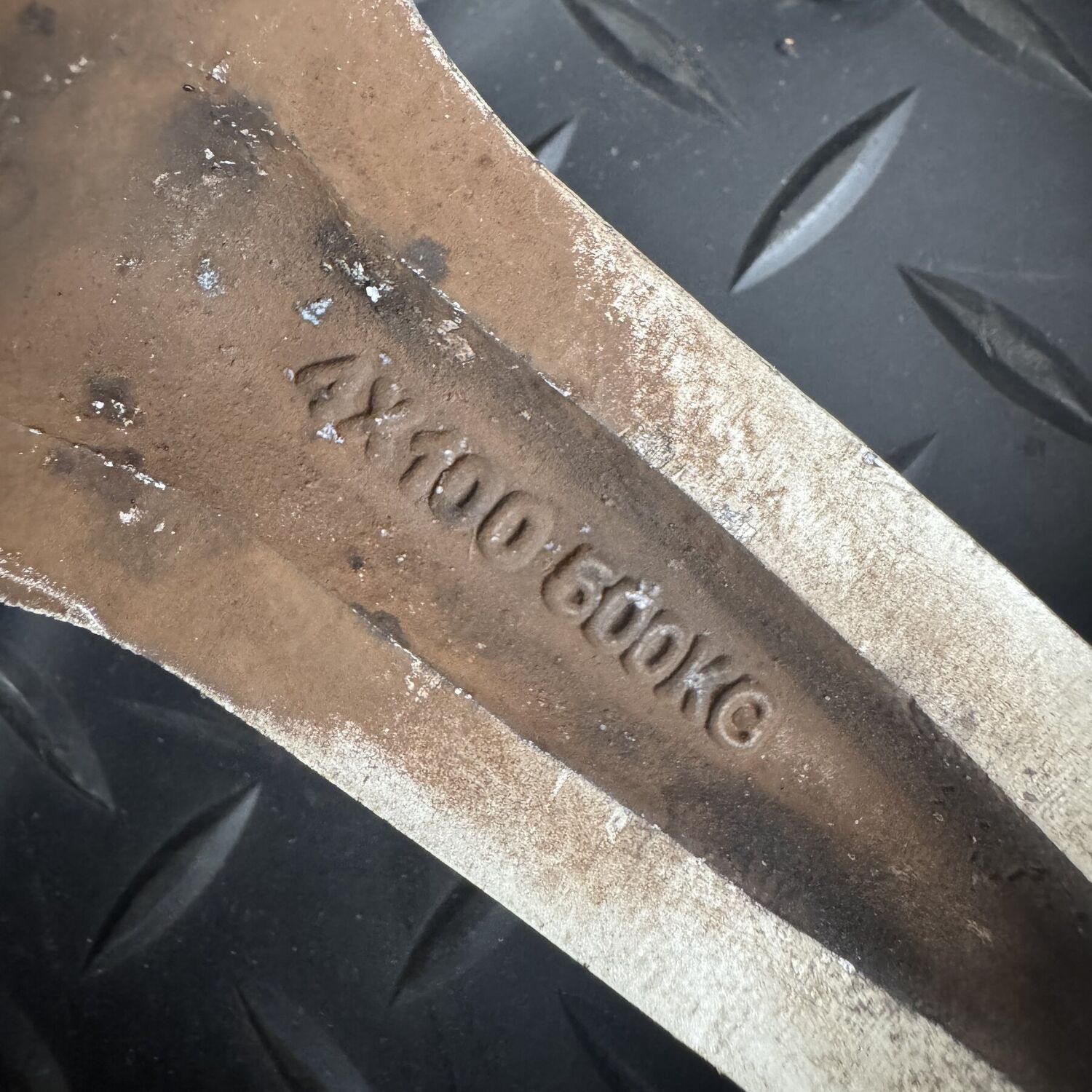
4X100 600KG — the bolt pattern and the per-wheel load rating, cast together on the back of a spoke.Size and Offset, Where You Would Expect Them
13X5 and ET with 40 below it, both cast into the back of the disc. Thirteen inches by five, offset +40.
Worth noting how ordinary this is. On the WORK Meister S1R we photographed for our markings guide, the full specification was pin-stamped into the barrel in faint dot-matrix characters that are easy to miss entirely. Here it is cast into the casting, in raised letters, permanent and unmissable. Both approaches are normal. If you only know one, you will look in the wrong place.
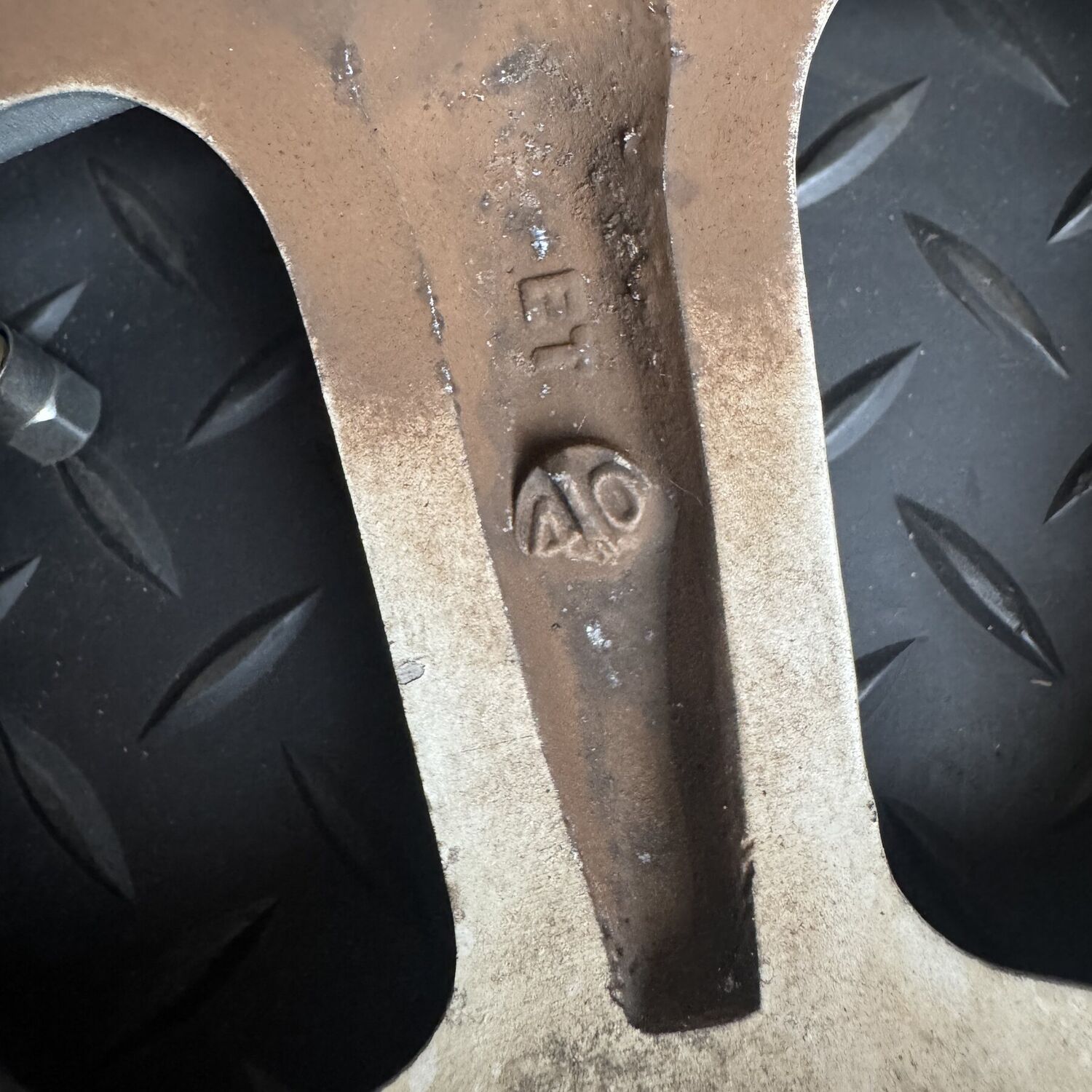
ET above 40. Offset +40, cast rather than stamped.The Paper That Survived
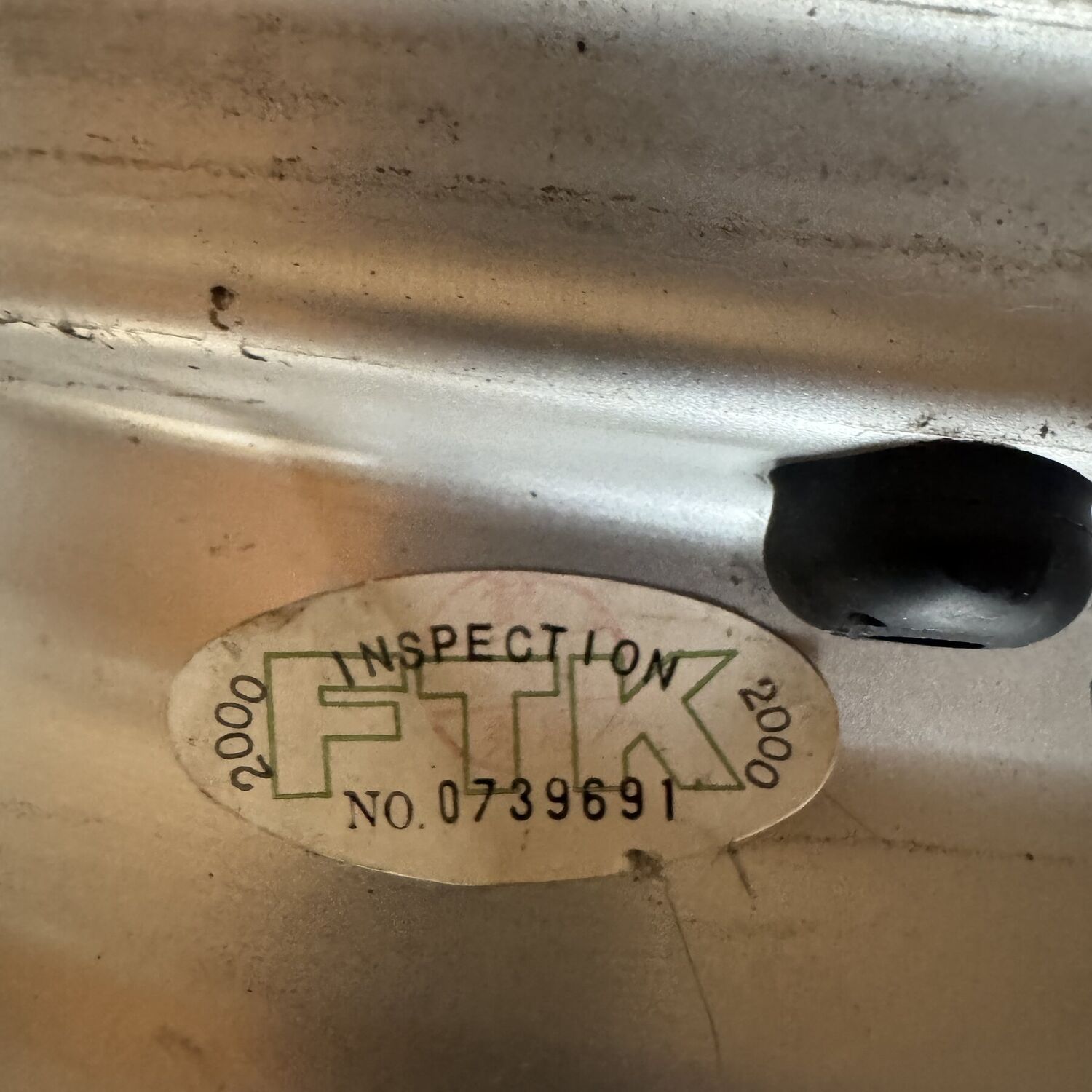
Still stuck to the inside of the rim well, twenty-odd years on: an oval sticker reading FTK INSPECTION, No. 0739691, with 2000 on either side.
We take the 2000 to be the year. We have not been able to identify what FTK stands for, and we are not going to guess — Daihatsu does not manufacture its own wheels, so somebody made these under contract, and this sticker is the most likely place that company’s identity is hiding. If you know, tell us.
The practical value of a surviving sticker is the same as on any used wheel: it suggests the wheel has not been refinished. Paper does not survive blasting and powder coating. It is not proof of anything, but it is texture.
The Codes We Cannot Explain
Two more markings appear repeatedly on these wheels and we cannot decode either.
F242, cast into the back of several spokes. Almost certainly a mould or part reference.
A two-digit number followed by a row of cross-shaped marks. One wheel reads 01 followed by four crosses; another reads 02 followed by five. The count of the crosses differs between wheels, which rules out a fixed suffix, and the leading number looks sequential, which suggests it may simply identify which of the four this is. It could equally be a date convention we do not know.
We are listing them rather than inventing meanings, so that if you find the same marks on a Daihatsu option wheel you know they are normal and appear on wheels we have handled.
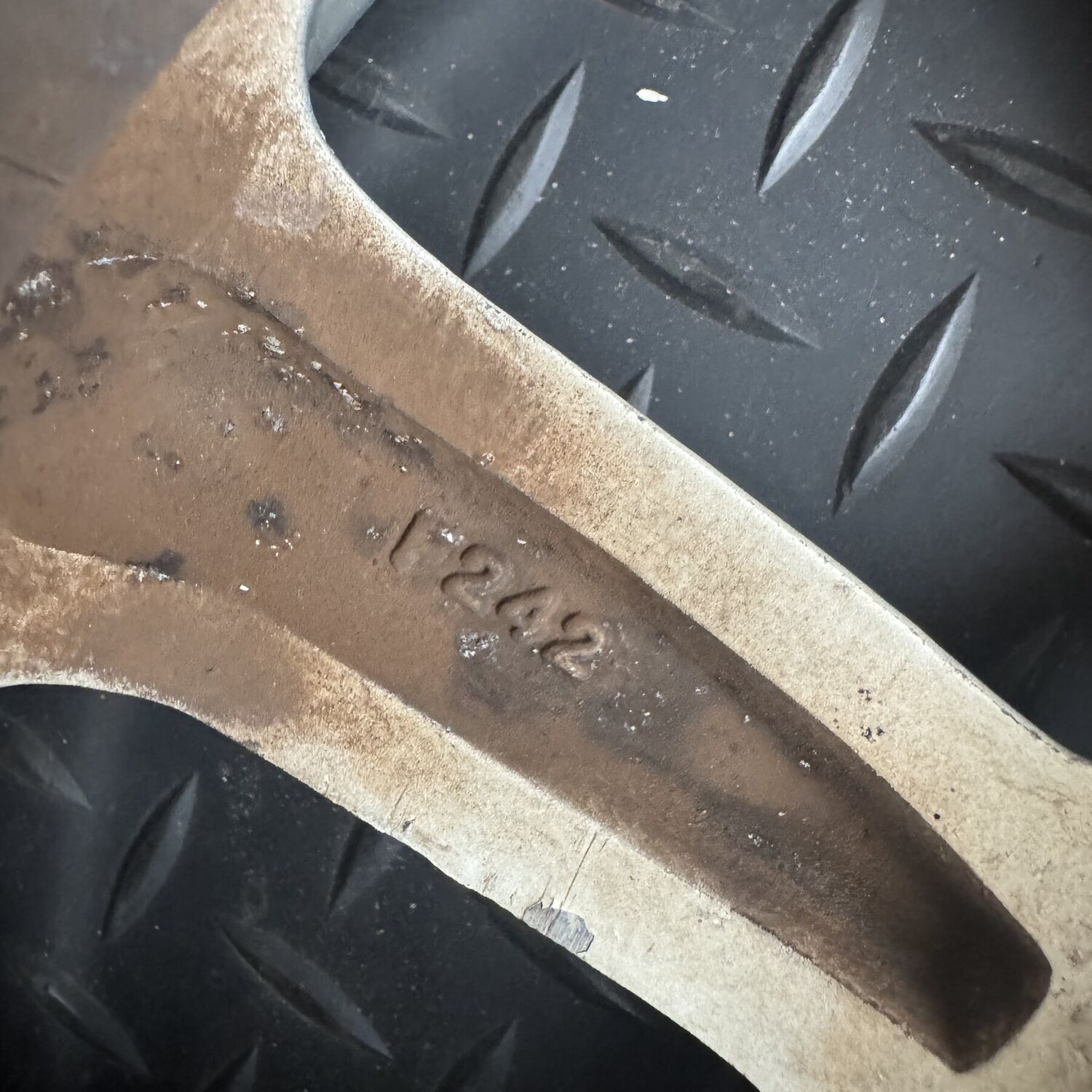
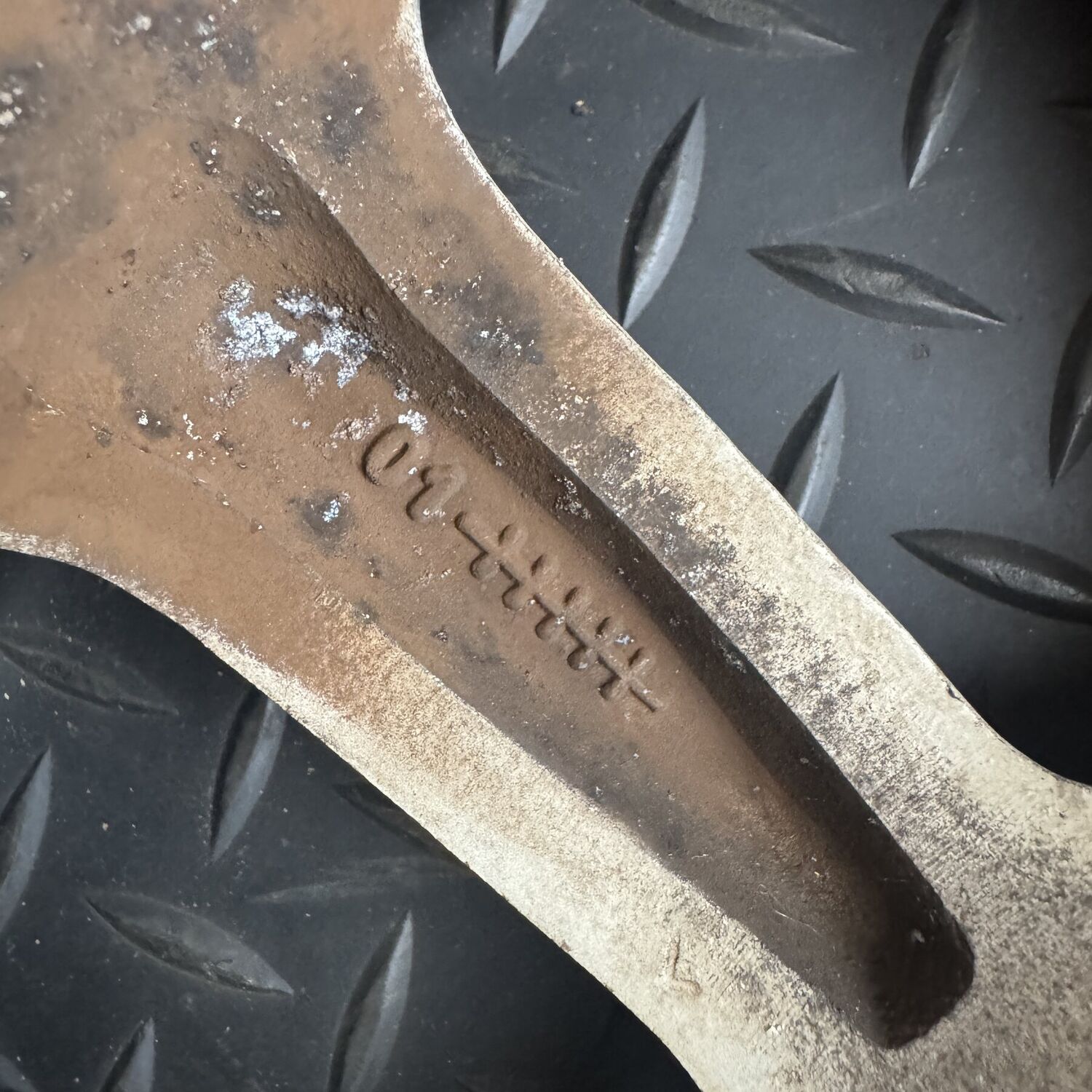
F242. Right: 01 followed by four crosses — a marking we could not decode.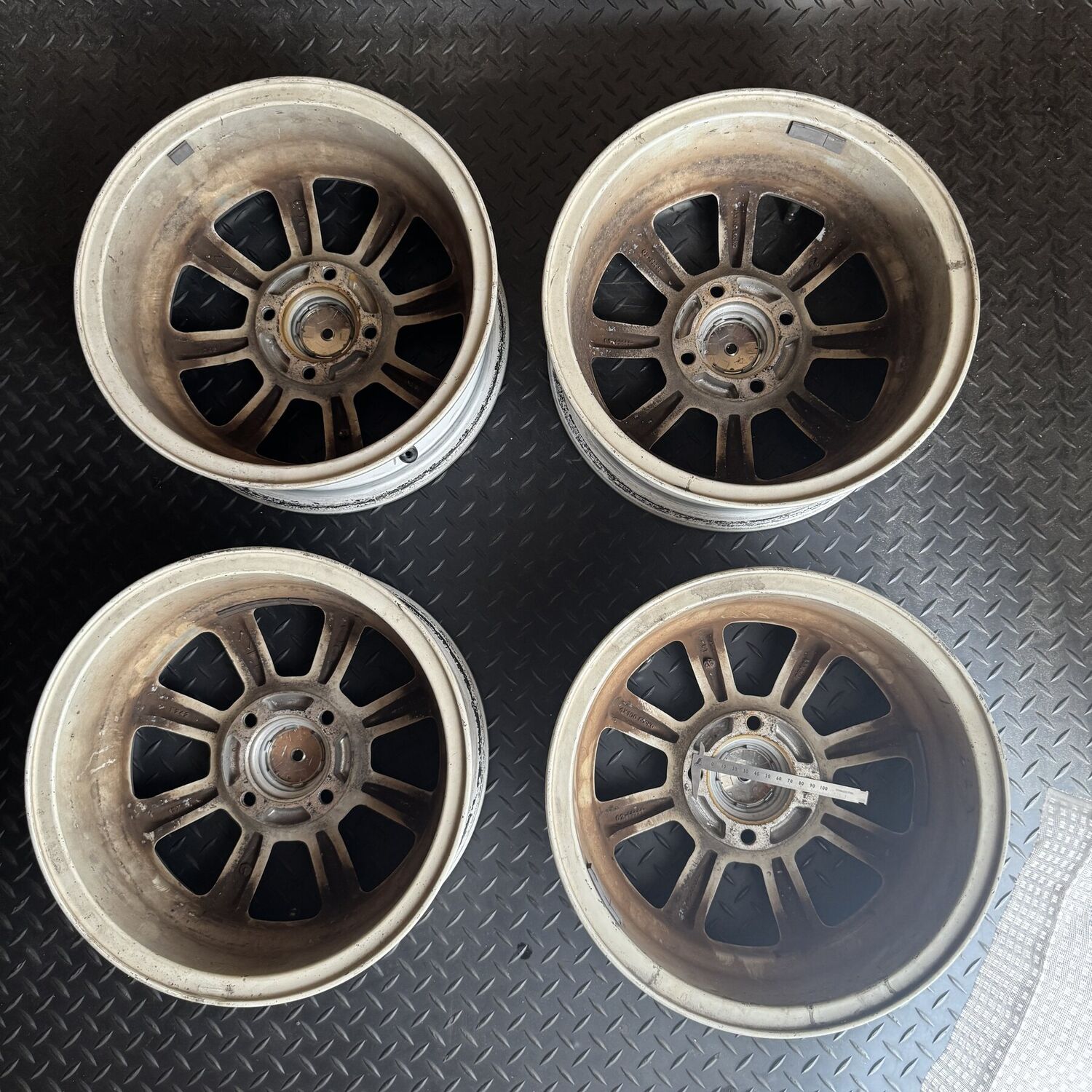
What This Wheel Teaches You About Reading Any Japanese Wheel
Three things generalise beyond this particular set.
The certification marks live on the front. JWL or JWL-T, and VIA, are required to sit where they can be read with the wheel on the car. If you are inspecting a used wheel and cannot find them from the front, ask why.
Everything else lives on the back. Size, offset, load rating, part codes, and whatever the manufacturer felt like recording. You have to turn the wheel over, and on a multi-piece wheel you have to turn it round as well, because the marks are spread across the circumference.
“Genuine” describes who sold it, not what it is certified for. This is a Daihatsu part with a Daihatsu brand on the cap, and it is certified for passenger cars. The badge and the certification are answering different questions.
What We Could Not Verify
- What FTK stands for. The most likely candidate for the actual manufacturer, and we could not identify it.
- The meaning of
F242and of the number-plus-crosses marking. - Which Daihatsu models this was catalogued for. 13×5J +40 on 4×100 suits the kei passenger range, but we found no DCN catalogue listing the applications.
- The centre bore. Deliberately not published here. The wheel has a stepped centre and our own measurements of the two steps disagreed enough that we would rather re-measure than print a number. We will add it when we are sure.
Related Guides
- How to read the markings on a WORK wheel — two sets photographed mark by mark, and why construction changes where the stamps are
- Kei trucks and kei vans — JWL-T explained in full, plus bolt patterns and the rebadging map
- Daihatsu Hijet fitment guide — the cargo side of the same manufacturer
- Suzuki Carry & Every — the other side of the kei commercial world
These Wheels
The set photographed here is in our warehouse in Chiba, and everything above was shot for this article rather than borrowed from a catalogue. If you want them, or want us to look for something similar, the Request page is the place — tell us the vehicle and what it is for.
And if you own a Japanese wheel with markings we have not covered, photograph the back of it and send it over. Every one of these articles gets better with more wheels in it.