
Introduction
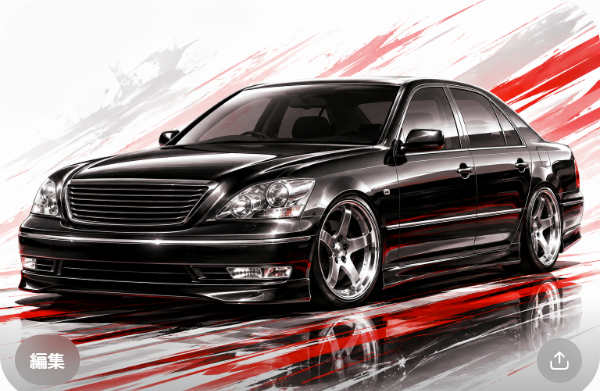
The third-generation Lexus LS430 — sold in Japan as the Toyota Celsior — is the car that defined VIP style. Its combination of a wide, heavy body, a soft factory ride and a long production run made it the default canvas for deep-dish wheels, air suspension and aggressive camber. But it is also a two-tonne luxury saloon, and the fitment decisions that work on a Miata do not transfer here. This guide covers the verified OEM specifications for both the USDM LS430 and the JDM Celsior, realistic aftermarket ranges, and three real builds.
Section 1: OEM Wheel Specifications
The LS430 and Celsior are the same platform (UCF30 / UCF31), and they share identical hardware: 5×114.3 PCD, 60.1 mm hub bore, M12 x 1.5 studs, 103 Nm torque. What differs is the factory wheel and tyre fitted in each market.
| Generation | Years | Variant | OEM Size | Bolt Pattern | Offset | Hub Bore |
|---|---|---|---|---|---|---|
| UCF30 / UCF31 | 2000–2006 | Celsior (JDM) | 7JJx16 | 5×114.3 | ET45 (43–47) | 60.1 mm |
| UCF30 / UCF31 | 2000–2006 | Celsior (JDM) | 7.5JJx17 | 5×114.3 | ET45 (43–47) | 60.1 mm |
| UCF30 / UCF31 | 2000–2006 | Celsior (JDM) | 7.5JJx18 | 5×114.3 | ET45 (43–47) | 60.1 mm |
| XF30 | 2000–2006 | LS430 (USDM) | 7.5Jx17 | 5×114.3 | ET45 (43–47) | 60.1 mm |
| XF30 | 2000–2006 | LS430 (EUDM) | 7.5Jx18 | 5×114.3 | ET45 (43–47) | 60.1 mm |
| XF30 | 2000–2006 | LS430 (option) | 8Jx19 | 5×114.3 | ET45 | 60.1 mm |
The detail most guides miss: the JDM Celsior had a 16-inch factory wheel that the USDM LS430 never received. If you are sourcing genuine take-off wheels from Japan, 7JJ x 16 ET45 is a real Celsior part — not an error in the listing.
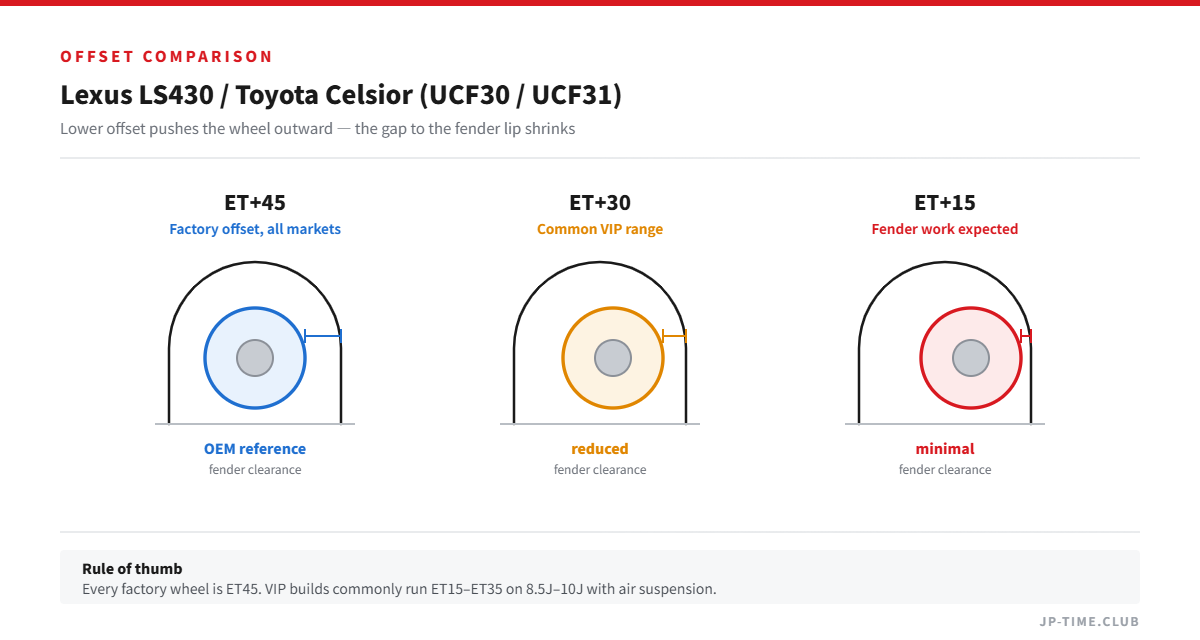
Key takeaway: every factory wheel across all three markets uses ET45. That single number is the reference point for every fitment decision below.
Section 2: Recommended Fitment Ranges
Factory-Faithful (Daily Driver)
Offset range: ET43 to ET47 — verified OEM tolerance
- Wheel size: 7J x 16 to 8J x 19
- Ride height: Stock, or up to 20 mm lowered
- Notes: A 19-inch 8J ET45 with 245/40ZR19 is a factory-listed option size, so it needs no modification at all
- Best for: Owners who want the car to ride as Toyota intended
Because the LS430 is heavy, wheel weight matters more here than on a light sports car. Dropping from a cast 19-inch to a forged 19-inch changes ride quality and brake feel noticeably.
VIP / Stance Fitment
Typical aftermarket range: roughly ET15 to ET35, with 8.5J to 10J widths
- Ride height: Air suspension is the norm on this platform, not coilovers
- Camber: Negative camber is used to tuck the wheel under the fender rather than to gain clearance
- Fender work: Rolling or pulling is common once you go below roughly ET25 at 9J or wider
- Best for: Show builds, static and air-ride VIP cars
Be honest about what this range is. Unlike the OEM figures above, these are not manufacturer specifications — they describe what the VIP scene commonly runs. The correct offset for your car depends on your exact wheel width, tyre section, ride height and camber. Measure before you buy.
The practical limit: one of the builds embedded below is a lowered UCF30 whose owner notes that the fenders bulged further after dropping the car, and that he now wants to replace them. That is the honest end-state of aggressive VIP fitment on this chassis — the fender becomes a consumable.
Instagram Search Keywords
To check real-world clearance before committing, search these hashtags. Post counts verified July 2026:
Platform Tags:
- #LS430 (209K)   #Celsior (218K)
- #UCF30 (86K)    #LexusLS430 (42K)
- #ToyotaCelsior (38K)

Style Tags:
- #VIPCar (591K)  #VIPStyle (444K)
- #VIPCarStyle (21K)  #LexusVIP (17K)

Wheel Brand Tags:
- #WORKWheels (1.9M)  #BBSWheels (1.1M)
- #RAYSWheels (776K)
Section 3: Real-World Build References
Each build below is a verified UCF30 or UCF31 with the wheel model named by the owner. These are reference images for style and stance on this specific chassis — they are not verified measurements of the offset figures above.
Lowered VIP build, deep-dish stepped lip clearly visible — via @yoshi_ucf31
Aftermarket air suspension, classic mesh face — via @kasa_cel_505
Owner notes the fenders bulged further after lowering — via @yusei_69celsior
Section 4: Selection Tips and Cautions
Specific to this platform:
- Load rating is not optional. The LS430 weighs roughly 1,800–1,900 kg. Lightweight wheels designed for a 1,100 kg sports car may not carry it. Check the JWL-T or load rating stamped on the wheel, not just the size.
- 60.1 mm hub bore is small for the weight. Hub-centric fitment matters here — rely on the hub, not the lug nuts, to carry the load. Use correctly sized hub rings if the wheel bore is larger.
- M12 x 1.5, 103 Nm. Deep-dish wheels often need extended or tuner lug nuts. Confirm thread engagement, not just that the nut fits.
- Air suspension changes the maths. Clearance at ride height tells you nothing about clearance when aired out. Check at both extremes.
Fitment verification checklist:
- ✓ Confirm your chassis code — UCF30 and UCF31 differ in trim and year, not in wheel hardware
- ✓ Measure fender clearance at full lock, not just straight ahead
- ✓ Verify wheel load rating against kerb weight
- ✓ Check brake caliper clearance before buying 16-inch wheels
- ✓ If air-ride: check clearance fully aired out and at maximum lift
Conclusion
The LS430 and Celsior share one of the most forgiving platforms in the JDM world: a single PCD, a single hub bore and a single factory offset across every market and every model year. That consistency is why the VIP scene settled on this car. Start from ET45 and work outward, respect the weight when choosing a wheel, and verify clearance at both suspension extremes rather than at ride height alone.
Looking for genuine Celsior or LS430 wheels from Japan? Submit a Request and we will search our networks in Japan for the size and offset you need.
Seen on the road
Which wheels are you looking for? Tell us the wheel, the size and the fitment — send us a request and we will go and find it.
Wheel identification is taken from the hashtags the owner applied to their own post.
Related Fitment Guides
- Lexus LS400 / Celsior — the predecessor, on the same fitment
- Lexus LS460 — where Lexus moved to 5×120
- Toyota Century — Toyota’s flagship on the same wheel
- Lexus IS — the same 60.1 mm Toyota bore
Every guide in this series is built the same way: verified factory specifications, an offset diagram, and an honest account of what fits and what does not.